WORKSHOPS
Saturday , Oct 17, 2026, - Morimono, A Feast for the Eyes
Amy Khedori - A playful and enjoyable workshop lead by Amy Khedori opened our eyes to a new concept of Sogetsu Ikebana where fruits and vegetables were used as the main components of our designs. A Morimono arrangement does not rely on a container to hold water. The materials can be placed in the container to form structures, or laid on a flat surface (a Dai) such as a mat, tray, base plate, woven basket, flat board, flat leaves or large piece of moss. While colors and mass are still essential in the arrangements, the core structural roles of Shin, Soe, and Hikae shift away from strict linear length and rely heavily on the weight, volume, and visual mass of the objects being placed.
Certificate Award to Nancy Brown was part of the event.
Saturday , April 18, 2026, - Meshing Around
Sue Schmidt - Another fun filled workshop where participants were introduced to very special unconventional decorative items in their arrangements. These include aluminum wire, chenille yarns, colored tubing, ropes and household finds. We learned how to step beyond the boundaries of traditional Sogetsu designs into a realm where imagination emerged. Sculpture is an important element when using unconventional materials. Softening the sculptured wire with colorful chenille yarns and rugged ropes can bring about textural depth, while using colored tubing helps to define space in the arrangements.
Saturday , March 21, 2026 - Embracing Negative Space
Wyman Wong - A fun experience of creating negative space, an important element of Sogetsu Ikebana. Participants were each provided red dogwood branches and reed strips (a midollino substitute ) to create the structural skeleton of an arrangement, then lay over with flowers and foliage in a way that negative spaces were formed. These intentionally created empty areas can expand and highlight the colors, textures, and focal features. They can also allow playful shapes and interesting forms in the arrangements. When done well, the emptiness should not distract, but add to the integrity of a design, and bring about balance , harmony, and wholeness to an arrangement.
Saturday , February 21, 2026 - Ikebana Adventure : Explosion of Color
Sahshah Middleton Sensei invited us to explore the creative boundaries of Sogetsu Ikebana by incorporating cut pool noodles as a primary unconventional medium. While the project required technical assembly of the vibrant foam pieces, the careful placement of curly willow, roses, and mums created a sophisticated sense of balance, harmony, and space.
Saturday , January 17, 2026 - New Year Arrangements
A fabulous demonstration and workshop presented by Sensei Kika Shibata on New Year Arrangements, using traditional materials like bamboo, pine branches, flowers and moss. The incorporation of contemporary materials like fan shaped gold and silver paper, along with Mizuhiki dramatically added vibrant color, structural beauty, and festive feel.
Saturday Dec 13, 2025 - The Art of Japanese Flower Wrapping
Aurora Glaze - Demonstration and workshop on Hana Tsutumi (Flower Wrapping), showing how traditional Japanese arts of origami, Ikebana and gift wrapping can be integrated to create unusual, modern and beautiful arrangements. Ordinary glasses and metal containers, when skillfully wrapped with decorative washi paper, and tied with traditional Japanese knots using mizuhiki or braided cords can become sophisticated and colorful pieces for display or as gifts.
Saturday Nov 15, 2025 - Focus on Tabletop Arrangements for Thanksgiving
Sandy Ehler - An adventure of Sogetsu Ikebana which blends the customs of Fall from Japan and the customs of American Thanksgiving season, highlighting the variations of tabletop designs.
Saturday, Oct 11, 2025
Road To The 100TH Anniversary Of Sogetsu Ikebana In 2027
Master Sensei Misei Ishikawa
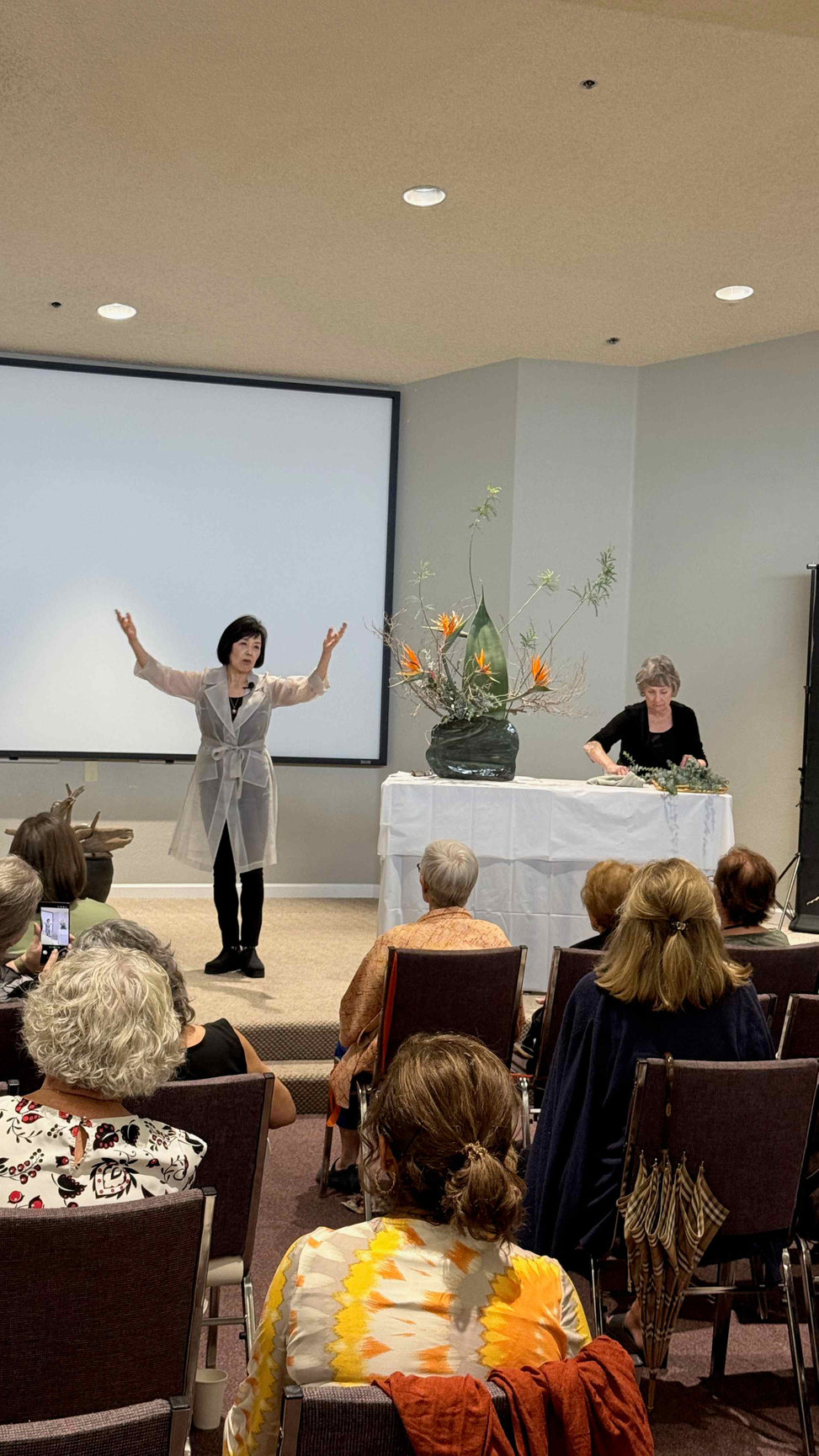
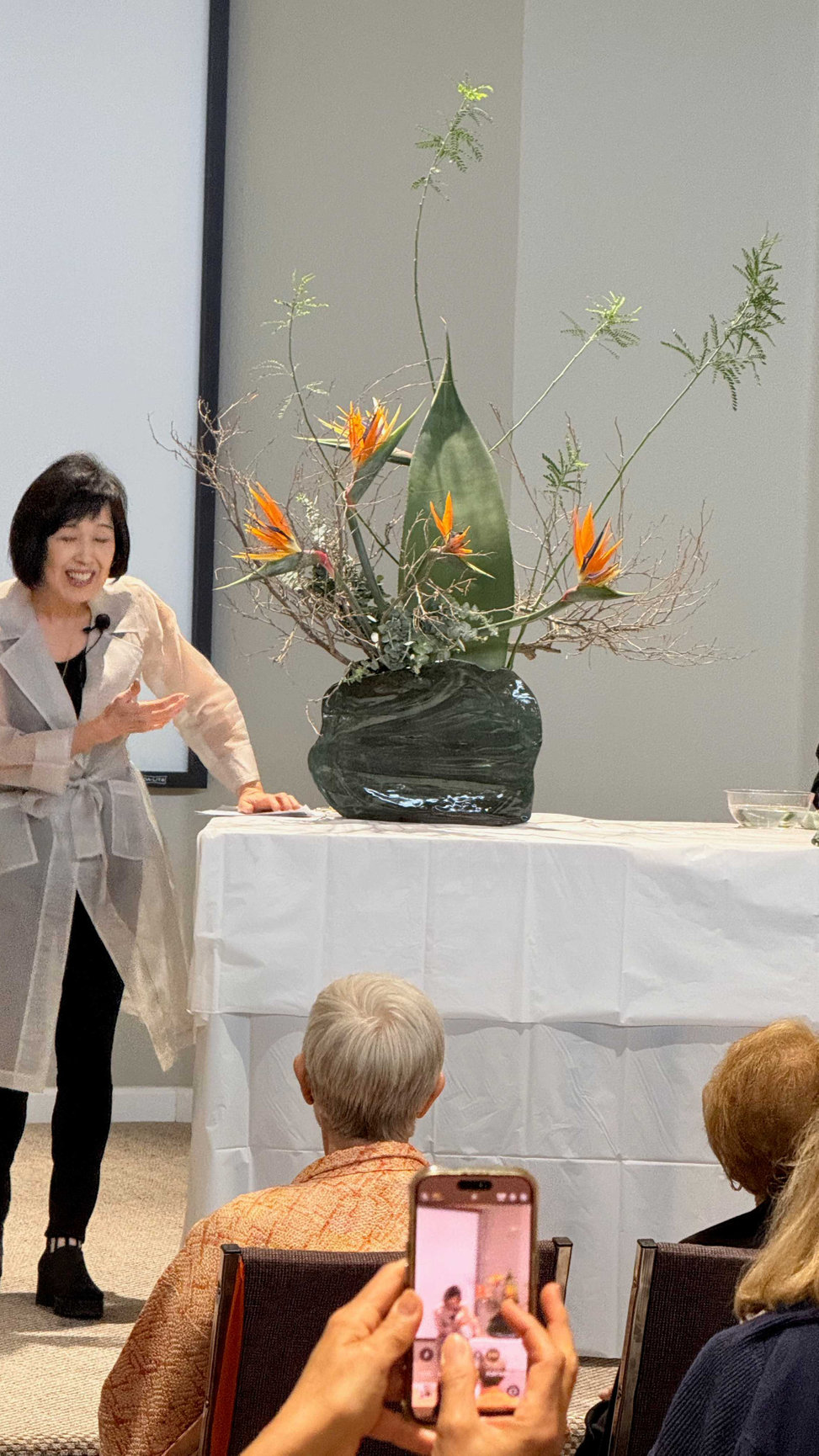
We had a great opportunity to learn from Sensei Misei Ishikawa, the Master Instructor at Sogetsu Headquarters Tokyo, and a globally recognized leader in Sogetsu Ikebana.
Her demonstration showcased some contemporary Ikebana designs built with branch structures, fall flowers, dried/bleached and colored plants, and various unconventional materials. In the workshop session, participants learned how to manipulate an assortment of leaves to demonstrate their individual creative mentality. Master Ishikawa was very pleased and showed appreciation of all of the students' work.